

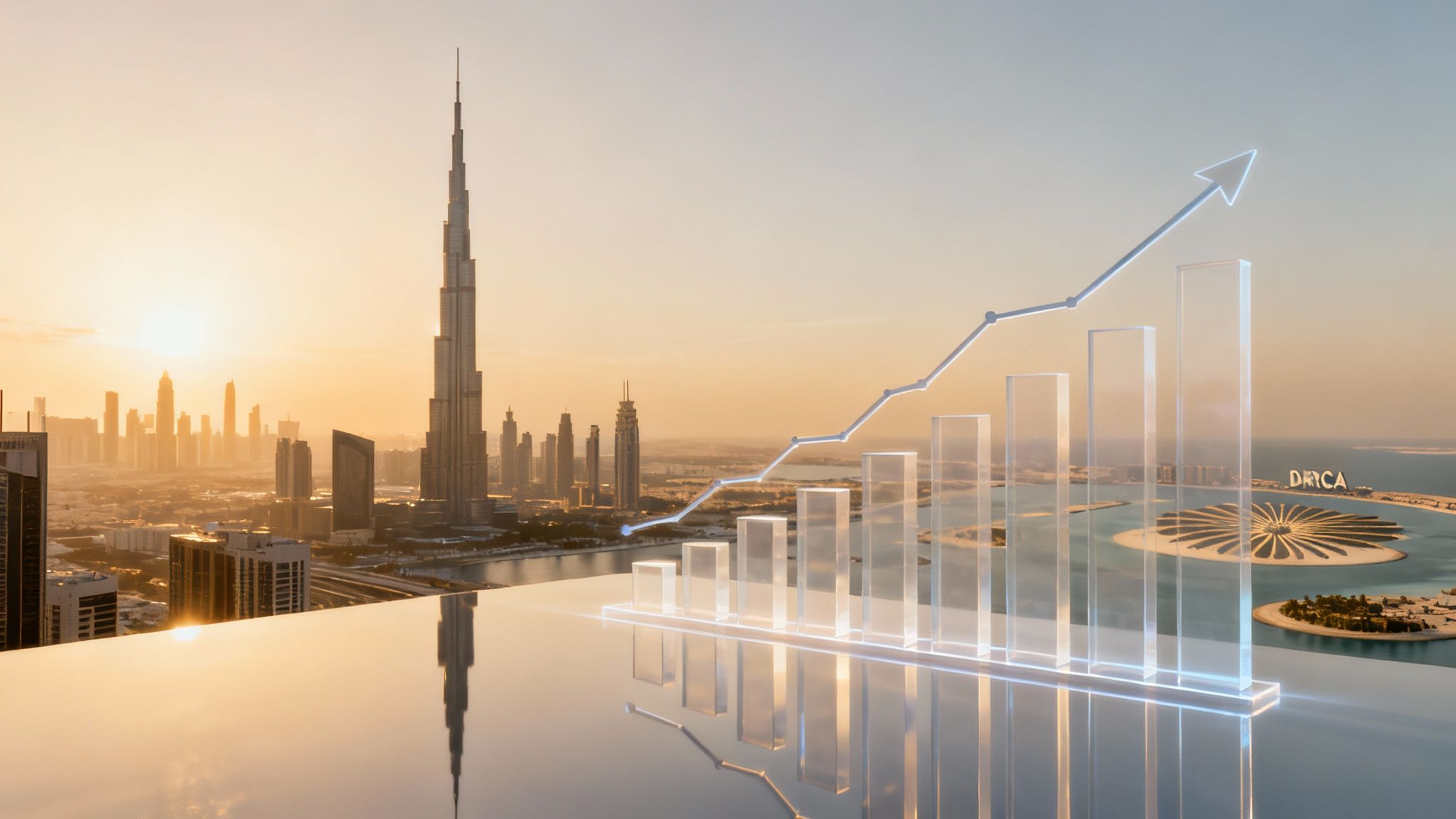
Entering 2026, the Dubai real estate market is signalling a fundamental recalibration. Last year's benchmarks, particularly the ubiquitous 1% monthly payment plan, are being phased out by major developers in favour of more robust 60/40 or 70/30 structures. This pivot is not a minor adjustment; it signals a maturing market and directly impacts the entry barrier and risk profile for new investors.
From Boom Cycle to Sustainable Growth Cycle
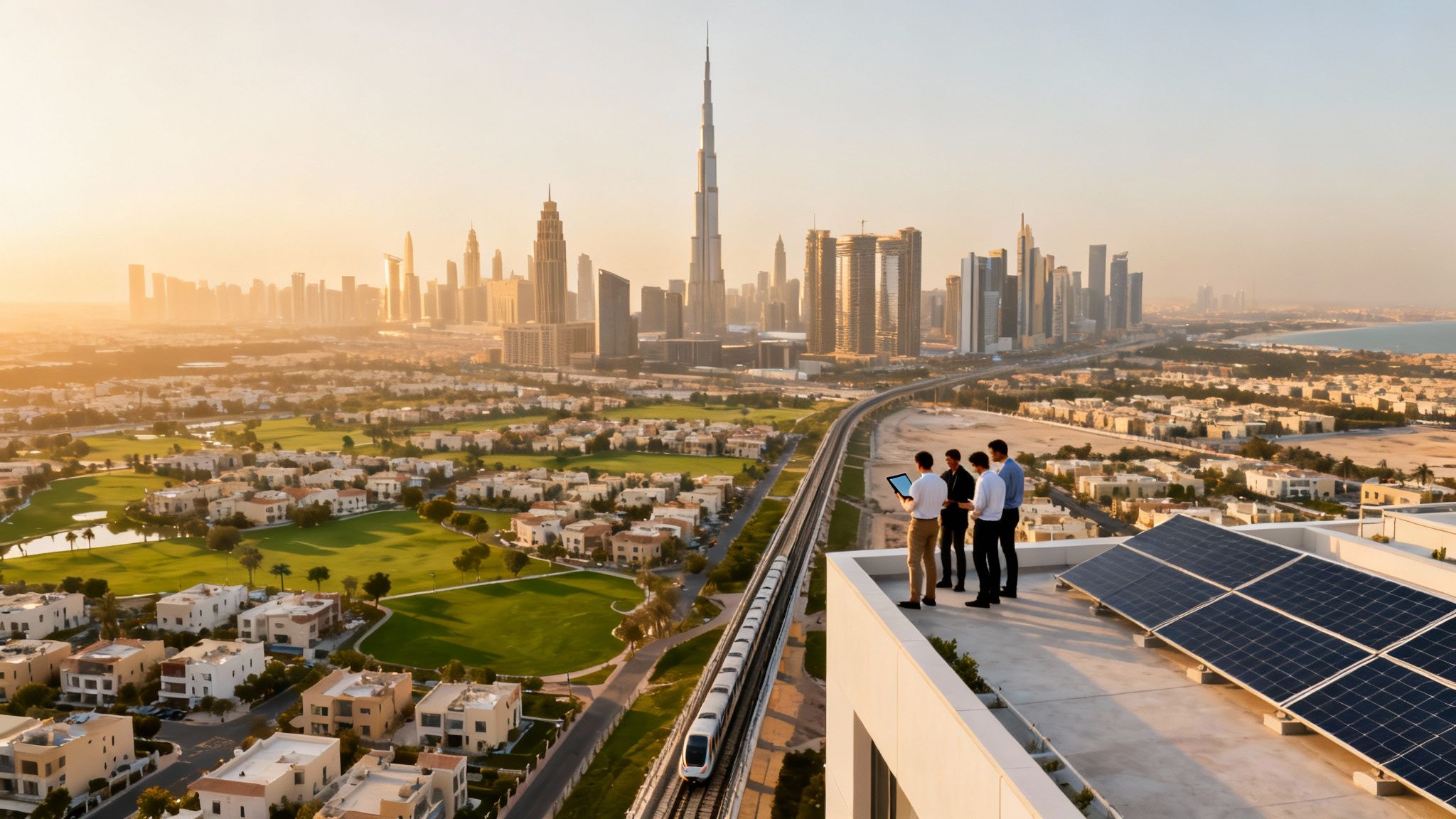
The theme for 2026 is strategic asset selection. Analysis of last year's transaction data reveals that broad, market-wide price lifts are a relic of the post-Covid boom. Growth is now concentrated in specific corridors and asset classes, demanding a granular approach from investors.
This is not a slowdown; it is a market maturation. The frantic pace has settled into a sustainable growth cycle, underpinned by solid economic fundamentals. The focus has clearly pivoted towards mid-market luxury and branded residences—asset classes offering a compelling balance of healthy rental yields and steady capital appreciation.
The Data Behind The Shift
To grasp this transition, one must examine the baseline set in 2025. Last year, the market hit a record-breaking AED 541.3 billion across 200,779 transactions, building on the momentum from 2021's AED 300 billion milestone. This long-term trend confirms the current cycle is built on a solid foundation, not a speculative spike.
Last year’s performance, especially in Q4 2025, shows that while transaction volumes remain high, the drivers have evolved. Off-plan sales continue to account for over half of all transactions, signalling sustained investor confidence in future projects, particularly in new master communities connected to upcoming infrastructure. A comprehensive dubai-real-estate-market-analysis is now essential for navigating this nuanced environment.
Key Drivers of Sustainable Growth
The market’s insulation from volatility is a direct result of several powerful, long-term policy decisions that favour investment over speculation.
- Expanded Golden Visa Programme: The refined golden-visa-uae initiative is a masterstroke in anchoring a stable base of end-users. This creates organic demand and reduces market volatility.
- Economic Diversification: Dubai’s non-oil economy continues to attract global talent and corporations. This influx fuels consistent demand for both residential and commercial real estate.
- Infrastructure Commitment: Major projects are shaping the city's future. The Etihad Rail network and the massive expansion of Al Maktoum International Airport are creating new economic hubs and driving targeted price growth.
As asset managers, our focus has shifted. We spend less time on broad market sentiment and more on the micro-dynamics of specific communities. The question is no longer "Is Dubai a good investment?" but "Which specific tower offers the best risk-adjusted return over a five-year hold period?"
This strategic recalibration demands a new mindset. The focus is now on identifying assets with intrinsic value that will perform over time, rather than riding the next market wave. This is where diligent analysis of payment structures, developer track records, and community master plans becomes critical. Building a resilient portfolio also requires an understanding of how to use sustainability storytelling to enhance asset reputation. Success in 2026 is defined by strategy, not speculation.
Gauging Price Momentum vs. Rental Returns
Headline price growth is only half the equation. The art is understanding the interplay between capital appreciation and rental yields. Data from H2 2025 painted a picture of a bifurcated market: established, blue-chip areas like Downtown Dubai saw value consolidation, while new master communities demonstrated far more attractive rental returns.
This split is a classic sign of market maturation. Early investors in prime areas have seen incredible capital growth, but their rental yields have likely compressed as property values outpaced rental increases. Conversely, today’s new growth corridors are where yield expansion is occurring, creating a powerful cash flow engine for a portfolio.
The Great Divide: Apartments vs. Villas
In 2026, apartments and villas must be treated as distinct asset classes with different drivers. The demand for villas, especially in zones like Dubai South and The Valley, is fuelled by families seeking larger spaces connected to new infrastructure—a trend that drove villa prices up last year.
Apartments, however, are a story of yield. Last year’s numbers confirm this. The overall Residential Sales Price Index rose a healthy 15.60% year-on-year. Deconstructing this, apartment prices increased by 15.22%, while villa prices surged 17.81%. This was driven by demand for two and three-bedroom units from expat professionals and landlords seeking solid returns.
You can also discover more about Dubai’s price history on globalpropertyguide.com.
Pinpointing Zones of Yield Expansion
Outperforming the market in 2026 requires identifying where rental yields are set to grow, not shrink. A 4% net yield in Downtown Dubai is stable. However, a projected 7-8% yield in a community adjacent to the expanding Al Maktoum Airport is a more dynamic and rewarding play.
Yield compression is the price of past success. Yield expansion is the reward for forward-looking analysis. The smart money is not buying where the market has been; it is buying where the infrastructure and people are going.
We constantly track rental absorption rates in newly handed-over communities. A new building in JVC might show a 9% gross yield on paper, but if the area is saturated with supply, the net yield could drop below 6%. This contrasts with a community with near-zero vacancy and a growing corporate tenant list, which offers a much more secure income stream.
[Chart: 2026 Payment Plan Breakdown]
The table below contrasts a mature area with a growth zone, based on Q4 2025 data.
| Metric | Mature Area (e.g., Dubai Marina) | Growth Zone (e.g., Dubai South) |
|---|---|---|
| Avg. Capital Appreciation (2025) | 6-8% | 12-15% |
| Avg. Gross Rental Yield (2025) | 5.5% - 6.5% | 7.0% - 8.5% |
| Yield Trajectory | Compressing | Expanding |
| Primary Investor Profile | Capital Preservation | Capital Growth & High Yield |
The data makes the strategic choice clear. The question is whether your objective is steady, lower-yield stability or the higher-growth, yield-focused appreciation offered by emerging corridors.
The New Dynamics Of Off-Plan Investments
While the secondary market offers stability, the off-plan sector remains the engine of Dubai's real estate growth. Last year’s data confirms that off-plan sales consistently accounted for over half of all transactions. In 2026, however, the speculative gambles of the past have been replaced by a more mature and secure investment framework.
The primary evolution is in payment plans. Construction-linked payment schedules are now the standard for major developers like Emaar, DAMAC, and Nakheel. This is a clear signal of market confidence and a direct benefit to investor security.
This infographic captures the key growth figures fuelling the market's current strength.
As the numbers show, both apartment and villa segments are seeing robust appreciation. The overall price index reflects a market expanding in a sustained manner.
A Deeper Look At Payment Plan Evolution
Modern payment plans are now directly tethered to verifiable construction progress, a system RERA rigorously enforces. Your payments are released from a secure escrow account only when specific, pre-agreed construction milestones are independently verified. This model de-risks your investment.
A solid grasp of Dubai off-plan property investment is non-negotiable before committing capital.
The move to construction-linked payments is the market's strongest vote of confidence in itself. It shifts the dynamic from speculation on a future concept to investment in a tangible, progressing asset.
To illustrate this shift, let's compare the payment structures from last year with the dominant models of 2026.
Payment Plan Structure Evolution 2025 vs. 2026
| Payment Milestone | Typical 2025 Structure (% of Price) | Dominant 2026 Structure (% of Price) | Investor Implication |
|---|---|---|---|
| Booking & Down Payment | 10% - 20% | 20% - 25% | Higher initial commitment filters for serious, well-capitalised buyers. |
| During Construction | 40% (Time-based instalments) | 50% (Construction-linked) | Payments are tied to tangible progress, reducing project delay risk. |
| On Handover | 50% | 25% - 30% | Lower final payment eases pressure for financing at completion. |
This structural change is backed by robust uae-property-law, which mandates RERA-approved escrow accounts. This legal safeguard is your armour, ensuring funds are protected.
The Master Community Imperative
Beyond payment structures, the most critical factor for off-plan success in 2026 is a project's deep integration within a master-planned community. A standalone tower cannot compete. Capital appreciation is now a direct result of tangible, on-the-ground growth.
Our vetting process for off-plan assets includes:
- Investment Pros: Confirmed infrastructure (metro stations, road access), strategic proximity to economic hubs like Al Maktoum Airport, and a clear schedule for amenity rollout (schools, retail).
- Investment Cons: Vague timelines, lack of surrounding infrastructure commitment, and a developer with a poor track record of community management post-handover.
[Map: Location relative to Al Maktoum Airport]
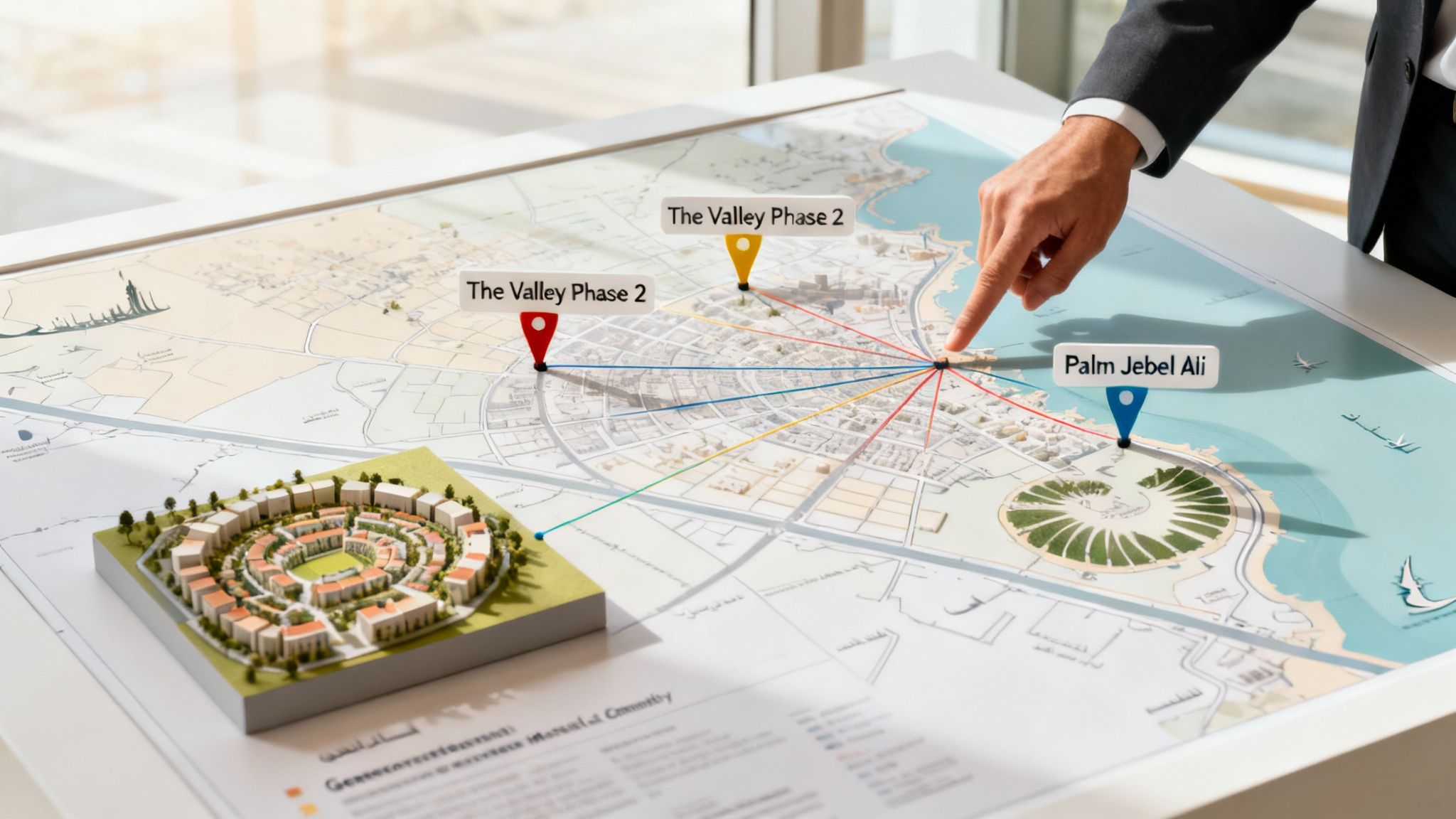
Choosing a project in a community like The Valley Phase 2 or the Dubai South expansion is a strategic decision. Your investment's value is buttressed by a wider ecosystem of growth, ensuring sustained demand. This is how off-plan investing becomes a calculated stake in Dubai's future.
Identifying The Next Generation Of Master Communities
While many investors fixate on established areas, smart capital is flowing towards the next generation of master-planned communities. Last year's data shows price growth in mature districts is levelling off. The potential for capital appreciation is now in zones with massive, committed infrastructure projects. The objective for 2026 is to identify these future hubs.
This is a calculated strategy based on tracking government infrastructure spending and developer delivery schedules. An analysis of the best areas to buy property in Dubai always reveals the same pattern: new economic centres create future real estate value.
Dubai South: The Aerotropolis Effect
Dubai South is the most compelling long-term growth story in the emirate. Its existence revolves around Al Maktoum International Airport, which is set to become the world's largest. This is an "aerotropolis"—a city purpose-built around a global aviation and logistics hub.
Last year, new residential projects in Dubai South were absorbed at a rate that outpaced many established communities. This demand is fuelled by professionals and families moving near employment zones like Expo City. For HNWIs, an asset here is a direct stake in Dubai’s core economic future.
The Valley: A Focus On Mid-Market Luxury
Emaar's The Valley demonstrates a pivot towards the mid-market luxury segment, a category with immense demand. The successful handover of its initial phases created a proven concept, and upcoming launches like Phase 2 are attracting significant attention.
The Valley's sound investment case is its self-contained ecosystem. Emaar is building a town centre, schools, and vast green spaces. This focus on liveability creates a stable secondary market and a healthy rental environment.
The investment thesis for a community like The Valley is straightforward: you are buying into a location where demand is created by the developer's commitment to community infrastructure, not just by broader market sentiment. This reduces downside risk.
Investment Profile Comparison: Key Emerging Communities
An informed decision requires a head-to-head comparison of investment metrics.
| Community | Primary Investment Driver | Target Tenant Profile | Projected 5-Year Appreciation | Key Risk Factor |
|---|---|---|---|---|
| Dubai South | Proximity to Al Maktoum Airport & Expo City | Aviation & Logistics Professionals | High | Dependent on airport expansion timeline |
| The Valley | Mid-Market Luxury & Community Amenities | Families & Mid-to-Senior Management | Moderate-High | Pace of retail & school development |
| Palm Jebel Ali | Ultra-Luxury Waterfront & Trophy Asset Status | HNWIs, C-Suite Executives | High | Market sensitivity to global economic shifts |
| New Branded Residences | Brand Association & Managed Services | International Investors, HNWIs | High | Delivery of complex infrastructure; brand sustainability |
Structuring The Investment
For many international clients, the purchase structure is as critical as the property itself. Using a dubai-llc-company-setup offers a formalised structure for holding multiple assets.
This approach simplifies portfolio management, succession planning, and the management of rental income. It transforms a property purchase into a professionally managed asset class within a broader wealth strategy, providing clarity on liabilities and potential taxes-on-property.
The Strategic Rise Of Branded Residences
Branded residences have transitioned from a niche segment to a core asset class in Dubai's luxury market. This structural shift attracts HNWIs and family offices who understand the distinction between buying a luxury apartment and acquiring a professionally managed, brand-backed asset.
Analytically, these properties consistently command a price and rental premium over non-branded counterparts in the same location. For a global investor, the value lies in superior property management and access to a rental pool often run by a world-class hotelier. This setup removes operational headaches and leads to higher, more consistent occupancy rates, boosting net returns.
The Financials Behind The Brand Premium
The premium for a branded residence is a quantifiable metric. In prime Dubai locations, a branded unit can achieve rental rates 20-30% higher than a comparable non-branded luxury unit next door. This uplift is driven by brand trust, superior amenities, and the brand's global marketing power.
This trend is especially visible in unique projects. The collaboration that produced the Binghatti Jacob & Co Residences fuses a developer with a luxury watchmaker, creating a new frontier in branding that commands global attention and a distinct price point.
Evaluating Brand Partnerships For Sustained Value
Not all brand partnerships are created equal. We apply a strict framework to evaluate their long-term viability.
The core question is whether the brand partnership creates tangible, long-term value or is merely a marketing exercise. A successful branded residence integrates the brand's service ethos into the living experience, justifying the premium year after year.
We analyse these key factors:
- Brand Type: Hotel brands like Four Seasons or St. Regis have a proven track record, making them a lower-risk choice for yield-focused investors.
- Service Charges: We run a thorough analysis of service charges versus the projected rental premium to ensure a favourable net ROI.
- Asset Liquidity: We assess the brand's global appeal to ensure a deep pool of potential buyers exists for a future exit, protecting the asset's value during market price adjustments.
The table below provides a simplified ROI profile comparison for different brand categories, based on last year's market performance.
| Brand Category | Typical Price Premium | Rental Yield Potential (Net) | Primary Investor Appeal |
|---|---|---|---|
| Luxury Hospitality | 25-35% | 6-8% | Yield & Stability |
| High Fashion/Jewellery | 30-50% | 5-7% | Trophy Status & Capital Growth |
| Automotive | 40-60% | 4-6% | Scarcity & Ultra-Luxury Appeal |
Investing in a branded residence is a strategic decision to acquire a professionally managed, high-yield product. It acknowledges that in a competitive luxury market, brand equity is a bankable asset.
Final Thoughts: Strategy Over Speculation
The window for 'easy flips' has narrowed. Success in 2026 requires targeting communities with genuine infrastructure growth—specifically those connected to the expanding metro lines and economic hubs. The market has matured, and our investment strategies must mature with it.
The Asset Manager's Mindset
Adopting an asset manager's perspective is a fundamental shift. It means focusing on the fundamentals that sustain value long after marketing campaigns fade.
- Cash Flow is King: Prioritise properties in sub-markets with proven rental demand and low vacancy rates. This ensures a stable income stream.
- Infrastructure-Led Growth: Anchor investments in locations set to directly benefit from confirmed projects like the Etihad Rail network or the Al Maktoum Airport expansion.
- Portfolio Diversification: Balance the high-growth potential of off-plan assets with the stability of income-generating ready properties to optimise returns and protect against market volatility.
This disciplined approach ensures your portfolio is built on a foundation of tangible value, not fleeting market sentiment. It is the definitive method for building lasting wealth in Dubai's sophisticated property market.
If you are rebalancing your portfolio for 2026, let's run the numbers.
Frequently Asked Questions
When advising HNWIs on deploying capital in Dubai, a few strategic questions consistently arise. Here are direct, data-backed answers.
Is Off-Plan Still A Viable Investment Strategy?
Yes, but the approach has changed. Success in 2026 is about securing units in well-conceived master communities backed by long-term infrastructure commitments. The market has shifted to construction-linked payment plans, tying capital growth to tangible progress. RERA protections, especially mandatory escrow accounts governed by strict uae-property-law, provide a powerful safety net.
Which Property Type Offers Better ROI: Villas Or Apartments?
This depends on your objective. Villas in emerging family-focused communities like Dubai South show strong potential for capital growth due to demand for space. Conversely, luxury apartments in prime locations—especially branded residences—are champions of rental yield, often achieving a net 6-8%. A balanced portfolio might include both for long-term appreciation and steady cash flow.
How Does The Golden Visa Programme Impact The Market?
The what-is-golden-visa-uae programme is a foundational pillar of market stability. By creating a clear path to long-term residency for property investments over AED 2 million, it has built a deep pool of end-users. This dynamic anchors the market with actual residents, smoothing out volatility and supporting steady rental demand.
Are Branded Residences Worth The Price Premium?
For investors focused on high yields and hands-off management, the premium is often justified. Branded residences can command rental rates 20-30% higher than comparable non-branded luxury properties. This translates directly into higher occupancy and better net returns. These assets also tend to hold their value better during market price adjustments due to their prestige and guaranteed quality. An investor must always analyse the service charges against the brand's reputation to ensure the premium works for them.
At Proact Luxury Real Estate LLC, our advisory extends beyond transactions. We build and manage high-performance property portfolios aligned with your long-term wealth objectives. If you are rebalancing your portfolio for 2026, let's run the numbers.