
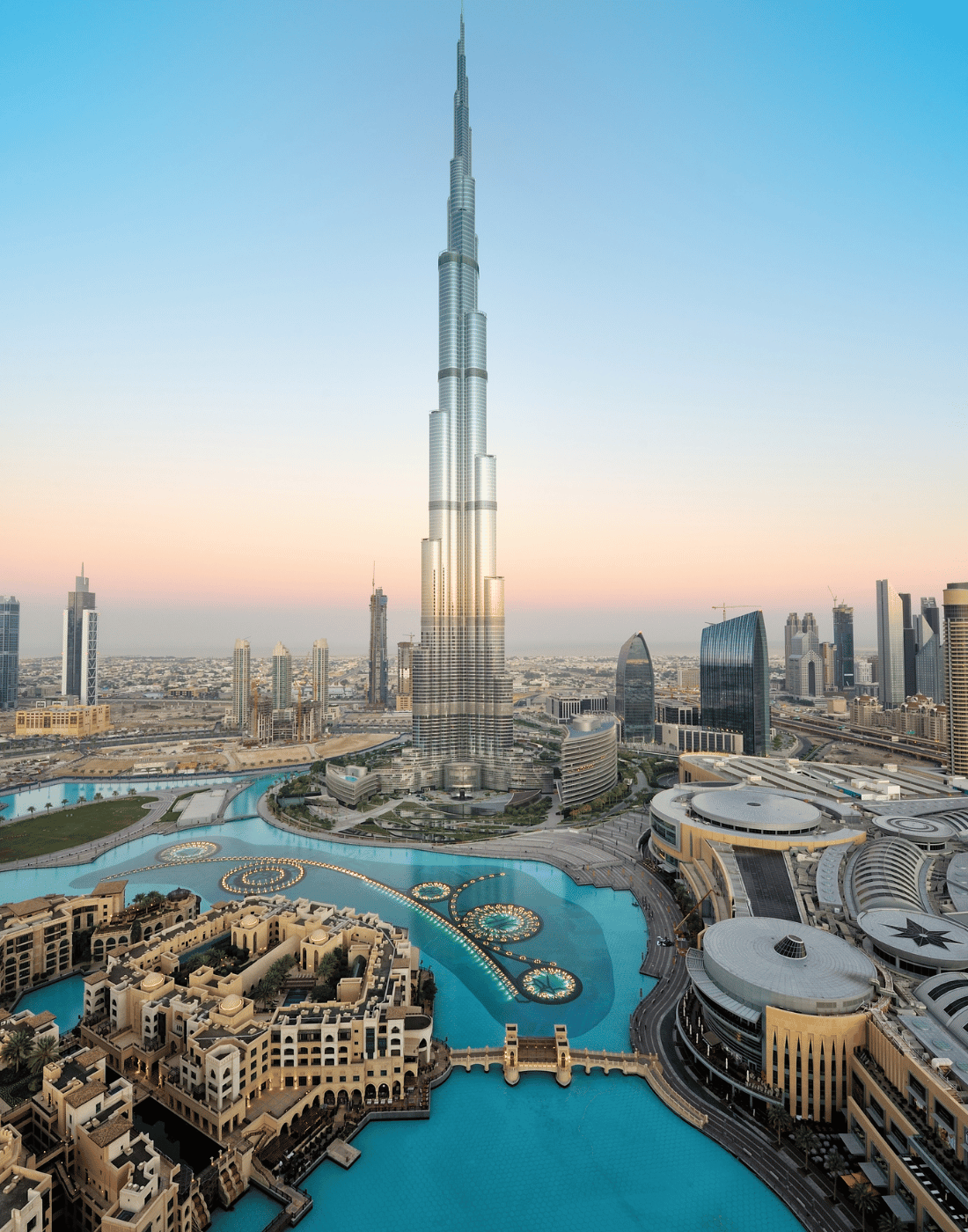
Investing in Dubai real estate means getting your financing in order, finding high-yield areas, partnering with a RERA-certified agent, and navigating the legal transfer with the Dubai Land Department. For international investors, the real opportunity lies in the designated freehold zones. Not only do you get full ownership, but you also unlock visa benefits like the Golden Visa, making it a savvy move for both your portfolio and your lifestyle.
Why Dubai Real Estate Is a Global Magnet for Investors
Let's cut through the noise and get to the core of why Dubai’s property market consistently pulls in global capital. This isn't just about flashy skyscrapers; it’s about a deliberate, government-backed vision that has created a secure and incredibly profitable environment for investors. It’s a compelling proposition for both seasoned pros and first-time international buyers looking to diversify.
The city’s allure is built on a foundation of policies that are exceptionally friendly to investors. Once you start exploring how to invest in Dubai real estate, you'll see the financial incentives are a massive draw.
A Framework Built for Profitability and Security
The single biggest advantage? Dubai's tax structure. Investors here enjoy zero property tax, zero income tax on rental returns, and no capital gains tax when it's time to sell. This tax-free setup means higher net returns, a benefit that very few other global property hubs can even come close to matching.
On top of that, the government actively encourages foreign investment with attractive residency programmes.
- The Golden Visa: This is a 10-year renewable visa, available for property investments of AED 2 million or more.
- The Property Investor Visa: A 2-year visa is granted for investments starting from just AED 750,000.
These aren't just about simplifying residency. They send a clear signal of a long-term commitment to foreign investors, integrating them into the very fabric of the UAE.
Robust Regulation and Unstoppable Growth
Beyond the financial perks, the market is anchored by a solid regulatory framework. The Real Estate Regulatory Agency (RERA) ensures transparency and fiercely protects investor rights, overseeing everything from off-plan sales to rental contracts. This level of governance builds tremendous confidence and minimises the risks that often come with buying property abroad.
You can see that confidence reflected in the market's powerful performance. In the first half of a recent year, Dubai's real estate sector saw total transactions hit a staggering AED 326 billion—a 39% jump from the previous year. This surge involved over 95,000 investors finalising more than 118,000 property deals, proving the market has incredible depth. The luxury segment is particularly on fire, a trend we broke down in our analysis of what's fueling Dubai's luxury real estate boom.
Dubai’s appeal isn’t just about the numbers; it's about a unique combination of world-class infrastructure, a growing population of over 3.8 million, and a reputation as a safe, stable global hub for business and tourism. This creates a constant demand for housing that sustains both rental yields and capital appreciation.
Choosing Your Path: Off-Plan vs Ready Properties
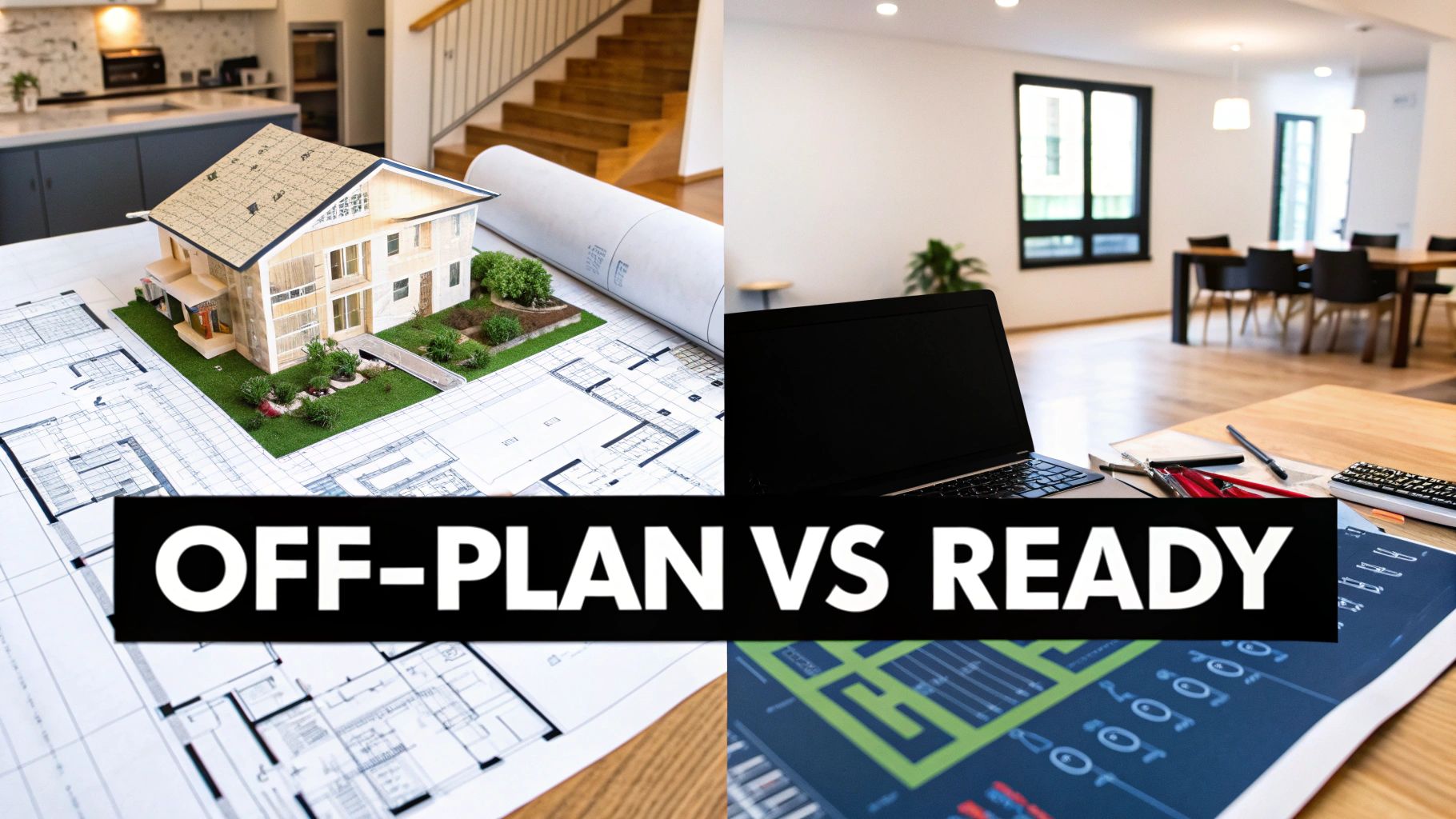
When you decide to invest in Dubai real estate, one of the first and most critical decisions you'll face is whether to buy a property that’s already built or one that still only exists on paper. This choice between the secondary (ready) market and the off-plan market will fundamentally shape your investment journey, from how you pay to when you see returns.
Instead of just listing pros and cons, let's walk through this like a real investor. Your personal financial goals and risk tolerance are your true north here, guiding you to the strategy that best fits your vision for building wealth.
The Appeal of Off-Plan Investing for Growth
Imagine you’re an investor with a long-term view, laser-focused on capital appreciation. You're not in a hurry for immediate rental income; your goal is to get in on the ground floor of a project in an area with explosive growth potential.
This is exactly where off-plan properties shine.
Picture a new villa project in an up-and-coming master community like Palm Jebel Ali or Dubai South. By purchasing directly from the developer before or during construction, you can often secure the property at a price well below what it will be worth once it's finished.
The financial structure is another huge draw. Off-plan deals come with attractive, developer-led payment plans, letting you pay in instalments over the construction period. This staggered approach means you don't need all the capital upfront, making it a much more accessible entry point for many investors.
But this path requires patience and serious due diligence. You're investing in a future asset, which naturally carries risks related to construction delays and final quality. It's vital to partner with reputable developers who have a solid track record of delivering on their promises. For a deeper dive, our guide on buying off-plan property in Dubai is a great resource.
Prioritising Immediate Cash Flow with Ready Properties
Now, let's flip the script. Maybe you need your investment to start working for you from day one. Your primary goal is immediate cash flow, either to supplement your income or to help cover the mortgage and service charges.
In this case, a ready property in the secondary market is the clear winner.
Think about a two-bedroom apartment in an established, high-demand community like Dubai Marina or Downtown Dubai. You can have it on the rental market almost immediately after the ownership transfer is complete. You can see, touch, and inspect the exact unit you’re buying, which completely removes the uncertainties that come with construction.
This strategy is all about predictability. You can accurately calculate your potential rental yield based on current market rates in the building and the neighbourhood. Financing is also more straightforward, as banks are generally much more comfortable lending against a tangible, completed asset.
The trade-off? A higher initial cost. You'll typically need a significant down payment—often 20-25% for residents and more for non-residents—plus all the associated fees to secure a mortgage and close the deal.
Off-Plan vs Ready Properties: A Comparison for Investors
To lay it all out, let's compare the key differences that matter most when you're deciding where to put your money. This table should help clarify which path aligns better with your investment style.
| Attribute | Off-Plan Property | Ready Property (Secondary Market) |
|---|---|---|
| Primary Goal | Capital appreciation, potential for high growth | Immediate rental income, stable cash flow |
| Initial Cost | Lower entry price, staggered payment plans | Higher upfront cost (down payment + fees) |
| Returns Timeline | Delayed returns, profit realised at completion/resale | Immediate potential for rental income |
| Risk Factor | Higher (construction delays, market shifts) | Lower (what you see is what you get) |
| Financing | Primarily developer payment plans | Traditional mortgage financing |
| Choice & Customisation | Choice of brand-new units, potential for customisation | Limited to available market stock |
Ultimately, there’s no single "better" option. The right choice is deeply personal and depends entirely on your financial situation and investment goals.
If you have the capital for a down payment and your priority is immediate, steady returns, the secondary market is your playground. But if you’re playing the long game for capital growth and want to take advantage of flexible payment plans, the off-plan market holds incredible potential.
How to Realistically Calculate Your Investment Returns
Forget the glossy brochure numbers and the promises of overnight wealth. When you're investing in Dubai real estate, the most crucial skill you can have is the ability to see past the hype and calculate your returns with cold, hard numbers. A realistic forecast is what separates a savvy investor from a hopeful speculator.
Your return on investment (ROI) really boils down to two things: net rental yield and capital appreciation. While they work together, they’re calculated differently, and you need a crystal-clear understanding of all the costs that can quietly eat into your profit margins.
Let's break down how to approach this like a professional.
Decoding Your Net Rental Yield
Gross rental yield is the number developers love to advertise. It's simple: the total annual rent divided by the property’s purchase price. It’s an attractive figure, but ultimately, it’s misleading. What truly matters to your bank account is the net rental yield, which tells the real story by factoring in all the expenses you'll face as a landlord.
Your annual costs are the big variable here, and they go far beyond just the initial purchase price.
- Annual Service Charges: These are mandatory fees for the upkeep of common areas like pools, gyms, security, and landscaping. Calculated per square foot, they can vary dramatically—from as low as AED 10 per sq. ft. in some communities to over AED 30 per sq. ft. in premium towers.
- Property Management Fees: If you hire an agency to handle finding tenants, collecting rent, and dealing with maintenance, they’ll typically charge 5-8% of the annual rental income. It's often money well spent.
- DEWA and Chiller Fees: While tenants usually cover their own consumption, you might be on the hook for certain fixed charges or costs during vacant periods.
- Maintenance and Repairs: Things break. It's smart to budget around 5% of your annual rent for those unexpected calls about a faulty air conditioner or a plumbing leak.
To calculate your net rental yield, subtract all these annual expenses from your total annual rent. Then, divide that net income figure by the total cost of your property (purchase price plus all initial fees) and multiply by 100 to get your percentage.
Factoring in Upfront Purchase Costs
Your initial investment isn't just the sticker price on the property. A handful of one-time fees must be added to your total acquisition cost to get an accurate ROI calculation.
- Dubai Land Department (DLD) Fee: A mandatory 4% of the property value.
- Registration Fees: Smaller administrative charges for issuing the title deed.
- Real Estate Agent Commission: Typically 2% of the purchase price.
- No Objection Certificate (NOC) Fee: Paid to the developer, this can range from AED 500 to AED 5,000.
- Mortgage Fees: If you're financing, you'll also have bank arrangement fees, valuation fees, and mortgage registration fees to consider.
For a deeper dive into how all these elements come together, exploring different strategies on how to maximise ROI on property investments in Dubai can give you some valuable context.
Think of it this way: an apartment in Discovery Gardens might flash a high gross yield, but if the service charges are proportionally high and tenant turnover is frequent, the net yield could be less impressive than a premium villa in Arabian Ranches, which often attracts stable, long-term families.
Gauging Capital Appreciation and Market Trends
Predicting capital appreciation is more art than science, but it absolutely must be grounded in solid data. Look at historical price trends in the community you're targeting, keep an eye on upcoming infrastructure projects (like a new metro line), and pay attention to the overall economic forecast.
The Dubai market is famous for its dynamic cycles. Investors are currently enjoying fantastic rental yields, with some of the more affordable communities hitting up to 11.2%—far surpassing many global cities. Even prime areas like Dubai Marina can get you close to 7.48%.
However, you also have to watch supply trends. With over 210,000 new units expected to hit the market by late 2025, a market recalibration is on the horizon. Many analysts anticipate a potential price correction of 10–15%, which will create both challenges and some fantastic buying opportunities for those who are ready. Analysing these trends is what will help you forecast returns and make a financially sound decision, not just an emotional one.
A Step-by-Step Guide to the Buying Process
Navigating the legal and financial side of buying property in Dubai might seem daunting at first, but it's a surprisingly well-oiled and transparent machine. Once you get a feel for the key milestones and paperwork, you can move forward with total confidence. Think of this as your personal roadmap to a smooth and secure transaction.
The real action starts once you’ve found the perfect property and shaken hands on a price. From that moment, a series of legal steps kicks in to make the deal official and protect both you and the seller. This is exactly where having a sharp real estate advisor and a good conveyancer becomes non-negotiable.
Securing The Deal With An MOU
The first major move is signing a Memorandum of Understanding (MOU), which you'll also hear called Form F. Don't let the name fool you; this is a fully binding contract. It locks in all the terms of the sale—price, payment schedule, handover date, you name it. This is also when the buyer typically pays a security deposit, usually 10% of the purchase price, which is held safely in escrow by a RERA-registered broker.
This document is your safety net. It stops the seller from backing out or trying to change the price, and it formally commits you to the purchase on the agreed terms. It's absolutely critical to review every line of the MOU before your pen hits the paper.
Obtaining The Crucial No Objection Certificate
Before the title deed can officially change hands, the property's developer has to issue a No Objection Certificate (NOC). This is simply a document confirming the seller is all paid up on their service charges and has no other outstanding debts tied to the property. It’s the developer's official green light for the sale.
To get the NOC, both you and the seller (or your representatives) will need to visit the developer’s office to apply. They'll do a final check, and once any outstanding dues are settled, they issue the certificate. This usually comes with a fee, typically ranging from AED 500 to AED 5,000.
Pro Tip: Think of the NOC process as a critical due diligence checkpoint. It’s what protects you from inheriting the previous owner's property-related debts. Never, ever proceed to the final transfer without it.
Finalising The Transfer At The DLD
With the MOU signed and the NOC in your hand, the last stop is the ownership transfer at a Dubai Land Department (DLD) trustee office. This is where it all comes together. Both parties meet to sign the final contracts and settle the remaining payments.
For this meeting, you’ll need to have a full set of documents ready:
- The original MOU (Form F)
- The developer's original NOC
- Your Emirates ID (if you're a resident) or your original passport
- The seller's original title deed
- A manager's cheque for the final property value, payable to the seller
- Separate manager's cheques for the DLD fee and your agent's commission
Once the DLD verifies all the paperwork and confirms the payments, they issue a brand-new Title Deed in your name. And just like that, you're officially a property owner in Dubai. The whole process is incredibly efficient and can often be wrapped up in a single day, a testament to how streamlined real estate investment is here.
This visual below breaks down the core financial elements of calculating your investment's potential profitability.
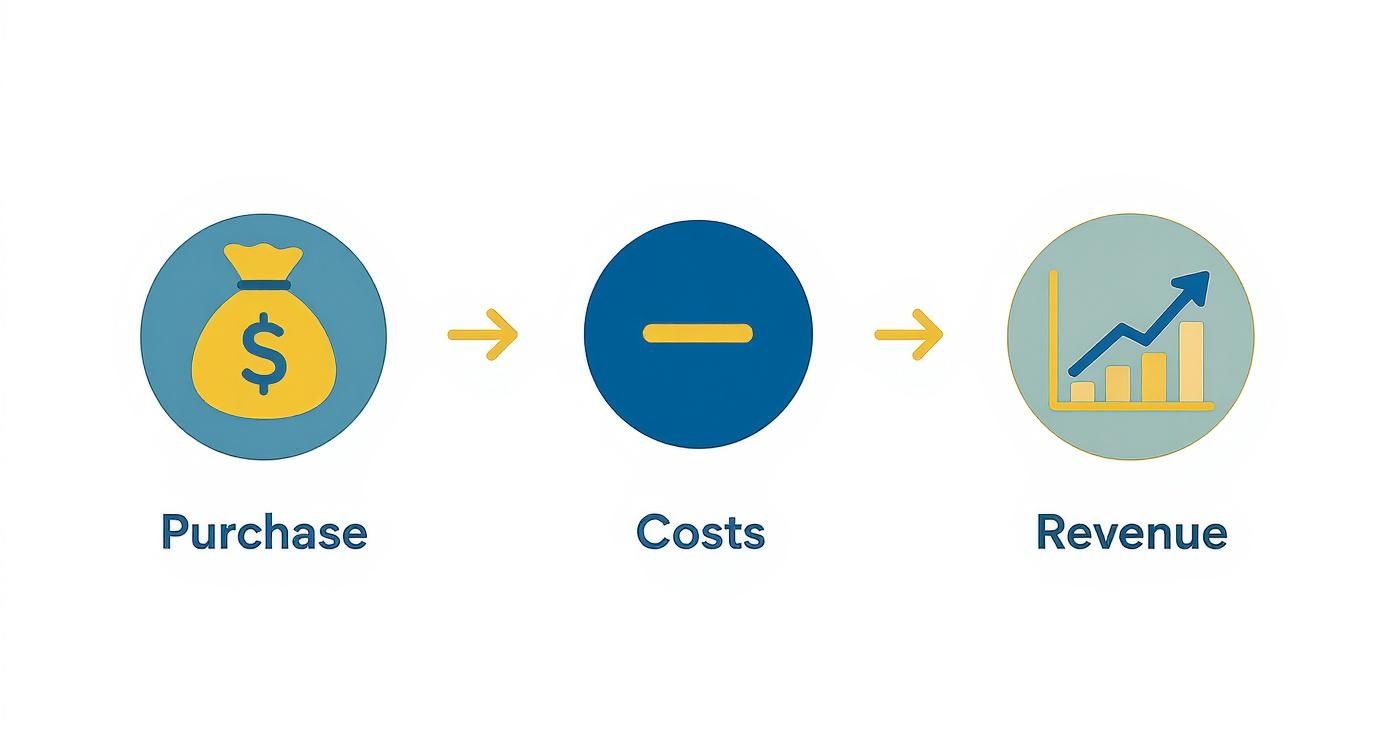
The infographic highlights that your true return is not just revenue minus purchase price, but the net figure after accounting for all associated operational costs.
Finding Dubai's Top Investment Areas and Future Hotspots
"Location, location, location." It’s a cliché for a reason. In Dubai, your choice of location dictates everything, from the rent you can charge to how much your property will be worth in a decade. Getting this right is about striking a balance between the proven stability of established communities and the explosive growth potential of the city's emerging hotspots. This is where we get practical.
The trick is to start thinking like your future tenant. Who are you trying to attract? A young professional wants the energy of city life. A family needs good schools and parks. A tourist wants to be close to the landmarks. Your investment location must line up perfectly with the demographic you want to rent to.
Anchoring Your Portfolio in Prime Communities
There’s a reason seasoned investors consistently put their money into Dubai's blue-chip neighbourhoods. Places like Downtown Dubai, Palm Jumeirah, and Dubai Marina aren't just addresses; they're global brands. They offer a level of security and consistent demand that makes them a relatively safe harbour for your capital.
These prime spots benefit from mature infrastructure, world-class amenities, and an unshakeable international reputation. Yes, the entry prices are higher, but they command premium rents and attract a steady stream of high-calibre tenants, from corporate executives to wealthy holidaymakers. An apartment in Dubai Marina, for instance, is a classic high-yield play that consistently delivers strong rental returns because of its vibrant lifestyle and waterfront appeal.
A key insight for investors: prime locations often mean lower risk and more predictable cash flow. While the percentage yield might be slightly lower than in an up-and-coming area, the absolute rental income and long-term value retention are typically very strong.
Identifying Tomorrow's Investment Hotspots
The real art of smart real estate investment is figuring out where the growth is heading next. Right now, the most exciting opportunities are cropping up in the new master-planned communities taking shape along Dubai's major transport arteries, especially the E311 (Sheikh Mohammed Bin Zayed Road) and E611 (Emirates Road) corridors.
These areas present a compelling proposition: brand-new properties, modern infrastructure, and significantly lower entry prices compared to the city centre. They are purpose-built to cater to the city's expanding population, offering the space and family-friendly amenities that are in high demand.
Keep an eye on communities that offer a complete lifestyle package:
- Dubai South: Anchored by Al Maktoum International Airport, this "city within a city" is poised for massive expansion, making it a hotspot for long-term capital appreciation.
- Damac Hills 2: Known for its green spaces and family-centric vibe, it attracts tenants looking for a suburban lifestyle without the prime price tag.
- Arabian Ranches III: Building on the huge success of its predecessors, it offers modern villas and townhouses that appeal directly to the family market.
The investment case for these areas is built on future potential. As they mature and infrastructure develops, property values and rental demand are expected to climb significantly. This forward-looking approach is critical for anyone serious about maximising growth from their Dubai real estate investment.
The market's vitality fully supports this strategy. Recent data shows Dubai's real estate market is on fire. One recent month saw over 20,000 sales transactions—a year-on-year jump of nearly 25%. The momentum didn't stop there, with a following month recording 18,678 deals worth AED 51.1 billion. This pushed year-to-date sales past 140,000 transactions, a clear signal that the market is on track for an all-time high. This level of activity signals deep investor confidence, particularly in areas with clear growth plans. You can dig into the full report on Dubai's recent market performance for more insights. This sustained momentum underscores the incredible opportunities available, especially in strategically chosen future hotspots.
Got Questions About Investing in Dubai? Let's Clear Them Up.
Even the most seasoned investor has questions when entering a new market. It's only natural. The details of Dubai's property laws, financing options, and ownership costs can seem tricky at first.
Let's cut through the complexity. Here are direct, straightforward answers to the most common questions we hear from investors like you. Think of this as the final layer of clarity you need to move forward with real confidence.
How Does Buying Property Affect My Visa Status?
This is a big one, and for good reason. For many global investors, property ownership in Dubai is a direct pathway to residency. You're not just buying an asset; you're securing a foothold in one of the world's most exciting cities.
The UAE government has rolled out specific visa programmes tied to real estate to encourage long-term commitment.
- The 2-Year Property Investor Visa: This is an option if your property investment is valued at AED 750,000 or more.
- The 10-Year Golden Visa: A more prestigious, long-term visa is granted for investments hitting the AED 2 million mark or higher.
These visas are a game-changer, allowing you and your family to live in the UAE. It's worth noting, however, that they don't automatically grant the right to work—you'd need a separate work permit for employment. To qualify, the property must be habitable, and crucially, your investment can't be financed with a loan or mortgage. It’s a powerful incentive that turns a property purchase into a life-changing decision.
Can Foreigners Actually Get a Mortgage in the UAE?
Yes, absolutely. Non-resident foreigners can definitely secure mortgages from UAE banks. However, the process and terms are a bit different than they are for residents, so be prepared for a more thorough application and stricter lending criteria.
Typically, you can expect a bank to finance around 50-60% of the property's value. This means you'll need to have a hefty down payment of 40-50% ready, plus funds to cover all the associated purchase fees.
The banks will want to see a comprehensive set of documents to get a clear picture of your financial health, including proof of income, bank statements, and often a credit report from your home country.
Expert Tip: The single smartest move you can make is to get mortgage pre-approval before you even start looking at properties. It sets your budget in stone, gives you serious negotiating power, and proves to sellers that you're a qualified buyer ready to act. Working with a dedicated mortgage broker can make this whole process a lot less painful.
What Are the Ongoing Costs I Should Plan For?
Your financial planning can't stop at the purchase price. To get a true picture of your net returns, you have to factor in the recurring costs of owning property in Dubai. These are just part of being a landlord here.
The most significant ongoing expense is the annual service charge. This fee covers all the upkeep and management of the common areas in your building or community—think swimming pools, gyms, security, landscaping, and general maintenance. It’s calculated per square foot and can vary quite a bit depending on the building's age, location, and the level of amenities on offer.
Beyond that, you'll need to budget for:
- Utility Bills: Mostly from DEWA (Dubai Electricity and Water Authority). Tenants usually cover this, but you might be on the hook for fixed charges when the property is vacant.
- Property Management: If you hire a company to handle your rental, expect to pay a fee of around 5-8% of the annual rent.
- Contingency Fund: It's always wise to set a little something aside for unexpected repairs inside your unit.
Building these costs into your financial model from the very beginning is the only way to understand your true net rental yield.
Should I Buy an Apartment or a Villa?
This is the classic strategic dilemma. The right answer comes down to your personal investment goals: Are you chasing immediate cash flow or long-term growth?
Apartments, especially in prime, high-density hubs like Dubai Marina or Downtown Dubai, tend to deliver higher rental yields. They are in constant demand from young professionals, couples, and tourists, which means they are relatively easy to rent out and keep a steady income stream flowing. Their lower price point also makes them a more accessible entry point for many investors.
Villas, on the other hand, are typically found in family-focused communities like Arabian Ranches or Damac Hills and appeal to a totally different crowd. They attract families looking for more space, privacy, and community perks like parks and schools. While the initial investment and service charges are higher, villas often show stronger long-term capital appreciation.
So, if your main goal is consistent monthly cash flow, an apartment is usually the way to go. But if your strategy is all about building wealth through asset value growth over the long haul, a well-chosen villa could be the perfect fit.
Getting these key questions answered is the final piece of the puzzle in building a solid investment strategy. Now that you have a clear grasp of the market's realities, you're ready to make your move.
For personalised guidance that aligns with your specific goals, the team at Proact Luxury Real Estate LLC is here to help you pinpoint the best opportunities in Dubai's dynamic property market. Explore your options and book a consultation with an expert advisor today.
Article created using Outrank