


Last year’s market shifts weren't just a blip on the radar; they redrew the entire map for asset protection. As we move through 2026, thinking about home insurance in the UAE has shifted from a simple chore for your mortgage application to a core pillar of any serious real estate investment strategy. This is no longer just about ticking a box.
The New Baseline for Asset Protection
For anyone with a significant property portfolio, viewing home insurance as just another recurring bill is a strategic error. The post-Covid boom has settled, and the conversation has moved from quick speculative flips to long-term asset management. In this climate, insurance isn’t a cost—it’s the mechanism that protects your capital growth and rental income from physical risks.
Last year’s storms were a live stress test for the entire market. It changed how insurers calculate risk, especially for prime villas in communities like Palm Jebel Ali or DAMAC Lagoons. A basic, bank-mandated policy is insufficient for a high-value property.
Mandatory vs. Strategic Coverage
Property insurance isn't federally mandatory across the UAE unless a mortgage is involved. Relying on that technicality is shortsighted. The real mandate comes from the market itself.
- Lender Requirement: If you're financing your property, the bank will insist on Buildings Insurance. This protects their loan. It covers the structure—walls, roof, fixed fittings—and nothing else.
- Investor Imperative: For a property owned outright, the correct move is to lock in comprehensive cover that protects your equity, rental income, and liability.
The growth in the UAE's property market has caused a similar surge in demand for property insurance. The trend is toward comprehensive policies that cover not just fire and theft, but also environmental risks like sandstorms and flooding. Savvy expat investors are actively seeking policies built for their specific needs, a trend detailed by market data on Statista.com.
A standard policy might cover the repair bill for a burst pipe, but it won't touch the AED 300,000 in lost rent while your waterfront villa is unlivable for three months. That distinction is where strategic asset protection begins.
The baseline for protecting assets in 2026 is different. It means moving past bare minimums and adopting a risk-management mindset. A well-structured insurance policy ensures a single event—a fire, a flood, a lawsuit—doesn't wipe out years of capital appreciation. It's an indispensable tool for protecting your investment's financial health.
Selecting the Right Policy for Your Investment Portfolio
Treating property insurance as a one-size-fits-all product is a classic, costly mistake. The type of asset you own dictates the protection you need, and confusing policy structures can leave your portfolio exposed. For investors in the UAE market, three specific types of cover are the foundation of any solid asset protection strategy.
Understanding how these policies work together is fundamental. Think of it as building layers of protection around your core investment to shield it from predictable financial hits.
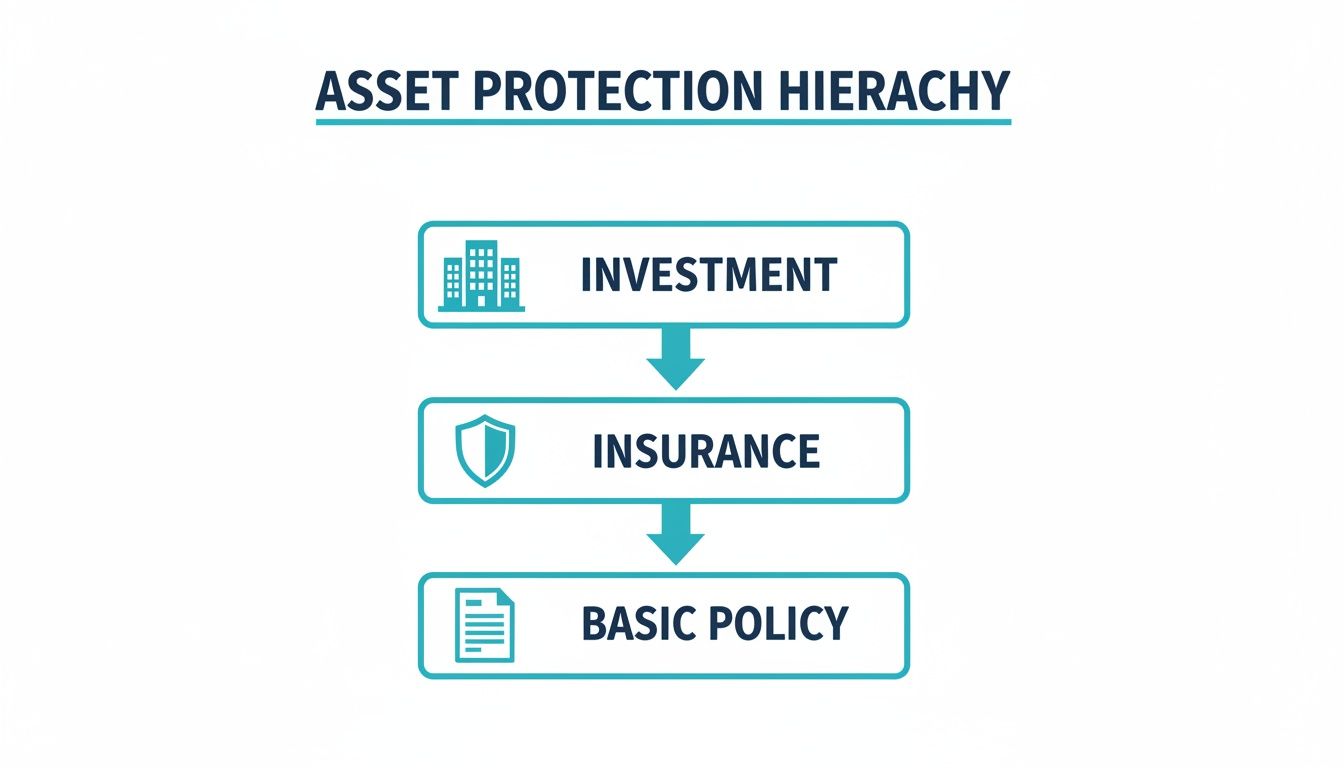
This diagram gets it right—the insurance is the shield you apply to protect the investment, not an end in itself. Picking the right policy starts with a clear understanding of what each one is designed to do.
Buildings Insurance: The Structural Foundation
This is the most fundamental layer of cover and is almost always required by mortgage lenders. Buildings Insurance protects the physical structure of your property—walls, roof, floors, and any permanent fixtures like kitchen cabinets or bathroom fittings. Its sole job is to provide the cash to rebuild or repair the property if it’s damaged by something like a fire or a major storm.
For an investor, this policy is non-negotiable, especially for standalone assets like villas. If you own an apartment, the developer or owners' association usually has a master policy for the building, but verifying its adequacy is crucial.
Contents Insurance: Protecting Movable Assets
Next is Contents Insurance, which covers all movable items inside the property. This includes furniture, electronics, artwork, and personal belongings. While often seen as only for owner-occupiers, it’s relevant for investors who rent out fully furnished units.
A furnished luxury apartment in Downtown Dubai could contain hundreds of thousands of dirhams worth of high-end furniture and appliances. If there’s a leak or a fire, none of that is covered by buildings insurance. A separate contents policy protects the value of these movable assets, preserving your property's rental appeal. Our complete guide on property insurance in Dubai provides further analysis.
Landlord Insurance: The Investor’s Essential Tool
This is the most critical, and most overlooked, policy for a real estate investor. Landlord Insurance is a specialist product that bundles several essential protections. It usually includes buildings insurance but adds vital coverage for the risks of leasing out a property.
Key components usually include:
- Liability Protection: This covers you if a tenant or their guest is injured on your property because of a structural fault.
- Loss of Rent: This compensates you for lost rental income if the property becomes unlivable after an insured event like a fire.
- Tenant Default: An optional add-on that can cover losses if a tenant stops paying rent.
For an investor with a portfolio of villas in a community like The Valley, landlord insurance isn't an optional extra; it's a core part of risk management. It directly protects your cash flow and shields you from liabilities standard policies won't touch.
To see how these policies fit different investment strategies, the table below breaks down their strategic value for various investor profiles in the UAE market.
Comparing UAE Home Insurance Policies for Investors
| Policy Type | Primary Coverage | Ideal Investor Profile | Key Strategic Benefit |
|---|---|---|---|
| Buildings Insurance | The physical structure and permanent fixtures. | Mortgage holders or owners of unfurnished, untenanted properties. | Fulfills lender requirements and protects the core structural asset value. |
| Contents Insurance | Movable items (furniture, electronics, art). | Investors with high-value furnished rental properties. | Safeguards the investment made in furnishing and maintains rental appeal. |
| Landlord Insurance | Structure, liability, and loss of rental income. | All investors with tenanted properties, from single units to large portfolios. | Secures rental yield against physical damage and mitigates tenant-related liabilities. |
Choosing the right insurance is a strategic decision to secure your asset's value and the income it generates.
Digging into Coverage Limits, Exclusions, and Add-Ons
The value of a home insurance UAE policy is in its wording. As an investor, you must analyze the fine print—specifically coverage limits, exclusions, and available add-ons—to understand what you’re buying. A cheap premium often signals restrictive terms that can make a policy useless when you need to file a claim.
Standard policies in the UAE cap payouts for specific events like water damage or fire. For a typical apartment, these limits might seem adequate. But for a luxury villa with high-end marble, custom joinery, and smart home systems, a standard AED 50,000 limit for water damage is dangerously low.
The extreme weather events of last year threw this issue into sharp relief. In 2025, the UAE's insurance sector saw revenue jump by 21%, even while dealing with massive losses from the heaviest rainfall in 75 years. These floods were a stress test for insurers covering high-value properties, proving catastrophic events are a real risk. While the market handled it well, the situation drove home the need for investors to secure policies with realistic, high-value limits. You can read more about last year's market performance at Insurance Business Magazine.
Understanding Common Policy Exclusions
Just as important as what's covered is what isn't. Exclusions are the specific situations where an insurer will refuse a claim. Ignoring them gives you a false sense of security.
Here are the key exclusions to look for in any UAE policy:
- Wear and Tear: Gradual deterioration over time is never covered. A pipe that finally gives out due to age is your problem. A pipe that suddenly and accidentally bursts is what insurance is for.
- Faulty Workmanship: If damage is caused by poor construction or defective materials, the responsibility lies with the developer or contractor, not your insurance company. This is a crucial distinction under current uae-property-law.
- Unoccupancy Clause: This is critical. Most policies become void if a property is left empty for an extended period, usually more than 30 or 60 consecutive days. For overseas investors, this is a massive tripwire that needs a specialized policy.
- Consequential Loss: A standard policy will pay to fix the burst pipe, but it won't cover the huge DEWA bill that results. That’s considered an indirect, or "consequential," loss and is typically excluded.
Strategic Add-Ons for Real Protection
This is where you can turn a basic policy into a serious asset protection tool. Add-ons, or riders, are optional extras that cover specific risks left out of a standard plan. They let you build a policy that fits your property's unique profile.
For a high-net-worth individual’s portfolio, certain add-ons are essential parts of a robust risk management strategy.
The most astute investors I work with don't just ask "Am I covered?" They ask, "What is the full financial impact if my property is out of commission for six months?" The answers are found in the policy's add-ons.
Valuable add-ons for UAE investors include:
- Alternative Accommodation Cover: If a fire or flood makes your property uninhabitable, this covers the cost of renting a similar place for your tenant. It directly protects your rental income and ensures you can meet obligations under the tenancy contract.
- Personal Liability Extension: Standard liability might cover a visitor slipping on a wet floor. An extension can push those limits much higher (up to AED 5 million or more) and cover incidents outside the property boundary but related to it, like damage from falling debris.
- Accidental Damage to Landlord's Fixtures by Tenant: This is a big one. It specifically covers damage your tenant causes to your fixtures and fittings—a frequent source of conflict and loss for landlords.
For investors who manage their property portfolio through a corporate structure, aligning the insurance policy with that legal entity is vital. Our overview on setting up a Dubai LLC company offers guidance on structuring this correctly. Ensuring the policyholder's name matches the ownership on the title deed prevents major headaches during a claim.
How Insurers Calculate Premiums for High-Value Properties
Forget standard online insurance calculators. For high-value properties in the UAE, insurers don't rely on generic formulas. They initiate a detailed underwriting process, assessing the unique risk profile of your asset. Understanding this process is key to securing the right cover and managing its costs.
An insurer's primary goal is to accurately price the risk of a total loss. This calculation is a granular analysis of factors that influence the probability and potential cost of a claim, all combining to create a bespoke premium for each luxury property.

Key Drivers of Premium Pricing
Insurers in Dubai weigh a handful of critical data points to determine the premium for a luxury villa or penthouse. The most influential of these include:
- Property Location and Proximity to Risk: A waterfront villa on Palm Jumeirah faces different risks (saltwater corrosion, storm surges) than an estate in Emirates Hills. Proximity to the coast or industrial areas directly impacts the premium.
- Construction Materials and Quality: Premium, imported materials like Italian marble or specialized glazing drive up the reinstatement cost and, therefore, the premium. Conversely, a property built with high-end, fire-resistant materials might earn more favorable terms.
- Security and Safety Systems: This is all about proactive risk management. Properties with certified fire suppression systems, advanced CCTV networks, and 24/7 monitored security present a much lower risk profile to an insurer.
- Owner's Claims History: An individual's track record of making insurance claims, both in the UAE and globally, is a strong indicator of future risk. A clean claims history can translate into better premium rates.
Reinstatement Value vs. Market Value
This is a frequent and costly mistake: insuring a property based on its market value (what it would sell for). Insurers are concerned only with the reinstatement value: the total cost to rebuild the property from the ground up to its original specification.
Reinstatement value includes demolition, debris removal, architect fees, and current construction costs. In a high-demand market like Dubai, rebuilding can cost 20-30% more than the property's sale price, leading to a massive coverage shortfall if you've insured it incorrectly.
A professional valuation survey for insurance purposes is mandatory due diligence. This ensures your coverage limit accurately reflects the true cost of a rebuild, saving you from the financial consequences of underinsurance. A proper valuation also ties into other financial aspects of ownership, like understanding the breakdown of housing charges in Dubai.
Proactive risk management offers the most direct path to negotiating better terms. When you demonstrate top-tier fire alarms, water leak detection systems, and robust security, you prove you are a lower-risk client. This data-backed approach can leverage a more favorable premium.
Executing a Successful Insurance Claim
An insurance policy is just paper until you need it to pay out. For a property investor, navigating the claims process is a critical defense for your asset's bottom line. The process demands speed, precision, and diligence. Any delay or oversight can complicate the settlement and impact your financial recovery.
The first moments after an incident are everything. Your absolute first priority is damage control: shutting off the water main or securing the property. Once safe, your next call is to your insurance provider to give formal notice. This action starts the clock on your claim.
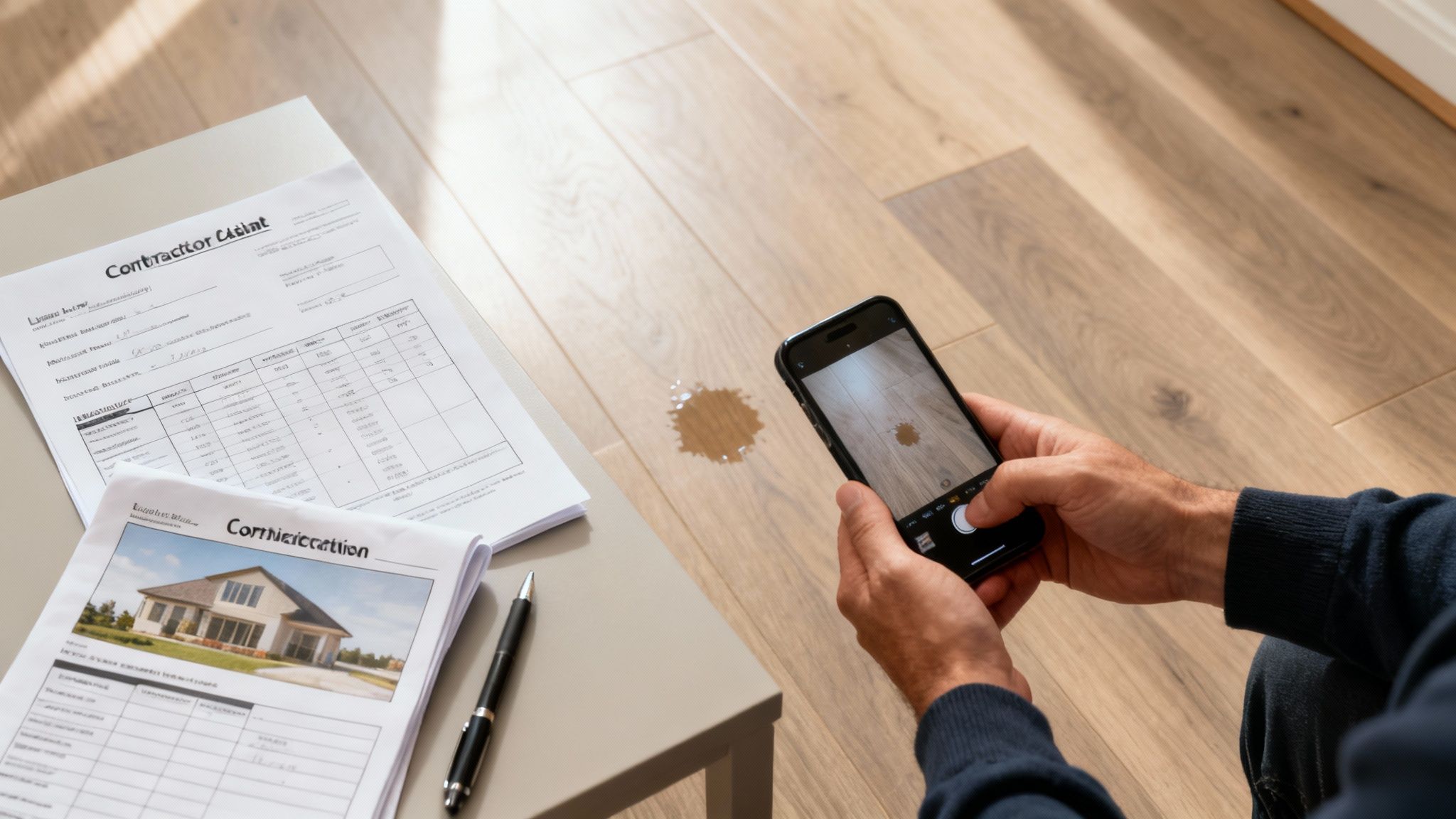
This proactive approach is more important than ever. The UAE's insurance industry is sharpening its underwriting. According to benchmarks from last year, the sector's total revenue hit AED 11.9 billion in Q1 2025, a 21% jump, while net profits climbed 24% to AED 987 million. This growth, highlighted by BADRI Consultancy, signals that while insurers are well-capitalized to pay, they expect policyholders to present a methodical, well-documented case.
The Documentation Dossier
A successful claim is built on undeniable proof. Ambiguity is the enemy; meticulous documentation is your ally. Your goal is to paint a factual picture of the loss that leaves no room for debate.
Your evidence file needs to be systematic:
- Official Reports: For any incident involving theft, vandalism, or fire, a formal report from Dubai Police or Civil Defence is non-negotiable. This is the first document an insurer will ask for.
- Photo and Video Evidence: Document everything immediately. Before any cleanup, take wide shots of affected areas and detailed close-ups of the specific damage. Video is better.
- Detailed Inventory of Losses: List every item damaged or lost. Include its make, model, approximate age, and replacement cost. If you have a home inventory list, you're ahead of the game.
- Repair Estimates: Get at least two detailed, written quotes from reputable contractors for all necessary repairs. This substantiates the financial side of your claim.
Managing the Loss Adjuster
Once you file a major claim, your insurer will bring in a loss adjuster. It is critical to understand their role: they are an independent professional hired by the insurance company to investigate the claim and determine the insurer's liability. They are not on your side.
Maintain professional, cooperative, and documented communication with the adjuster. Provide all requested information promptly, but always keep your own complete copies. Treat every interaction as part of the official record.
Clear communication and organization are everything. If you're a landlord, that same diligence applies to your rental paperwork. Our guide on the tenancy contract in Dubai offers more context on the legal frameworks you should master.
A fast and fair settlement comes down to your ability to present a well-supported, undeniable case. By treating the claims process with the methodical approach you'd apply to a property acquisition, you ensure your insurance policy works as designed—as a financial shield for your investment.
Final Thoughts: Strategy Over Speculation
In the UAE's property market, your approach to home insurance must be more than a box-ticking exercise. As the market transitions from last year’s speculative frenzy into a more sustainable growth cycle, asset protection becomes a critical part of portfolio management. The recent shifts in the market are tangible threats to your capital.
Securing a meticulously crafted insurance policy is a strategic, executive-level decision that directly supports the long-term health of your real estate holdings. A comprehensive policy acts as a firewall between your asset and financial loss, ensuring that years of capital growth aren't wiped out by a single fire, flood, or liability claim.
For the serious investor, insurance isn't an expense line item; it's a non-negotiable risk mitigation strategy. The real cost isn't the premium you pay, but the catastrophic loss you could face from inadequate coverage.
At Proact Luxury Real Estate, we consider insurance advisory a core pillar of asset management. It's inseparable from acquisition strategy, financing, and understanding the finer points of UAE property ownership, including the various taxes on property that impact your bottom line. We bake this thinking into every client relationship.
If your current coverage hasn't been stress-tested against today's market realities and replacement values, it likely has critical gaps. The market of 2026 demands a more rigorous approach. Now is the time to reassess its adequacy and ensure your portfolio is truly fortified. If you are rebalancing your portfolio for 2026, let's run the numbers.
FAQs for Property Investors
When managing a high-value property portfolio, the details of insurance are fundamental to protecting your assets. Investors often have the same practical questions. Here are direct answers.
Is Home Insurance Mandatory for Off-Plan Properties?
Not immediately, but waiting is an oversight. While the developer’s initial defects insurance covers structural issues for a period after handover, it does nothing for your personal liabilities or contents.
The moment you take possession, the risk becomes yours. If you've financed the purchase, your bank will make buildings insurance mandatory from day one of handover. Astute investors have a policy ready to go live on the day they get the keys. This protects your initial investment and any immediate upgrades.
How Does a Tenant Affect My Insurance Requirements?
This is a critical distinction. A standard home insurance policy is wrong for a rented-out property. You need a specific Landlord Insurance policy, designed for the unique risks that come with tenants.
This policy covers the building and your fixtures, but more importantly, it shields you from liability if an incident involving your tenant happens on the property. You can also add cover for loss of rent if an insured event makes your property uninhabitable, directly protecting your rental yield.
Failing to inform your insurer that the property is tenanted will almost certainly void a standard home policy. In the event of a claim, you would be exposed to financial and legal action.
Does a Standard Policy Cover Damage from Sandstorms?
In the UAE, most comprehensive home insurance policies do cover damage from natural events like sandstorms. However, coverage can vary between insurers.
Check the policy wording yourself. Ensure it explicitly lists ‘storm’ or ‘windstorm’ as a covered peril. Also, look at the exclusions. Damage caused by poor maintenance, like sand getting in through poorly sealed windows, will likely be rejected. For luxury properties with large glass panels or expensive outdoor features, you must check the specific limits for this type of damage.
What Is the Difference Between Reinstatement and Market Value?
Understanding this is one of the most important things in property insurance. Getting it wrong is the primary cause of being underinsured and facing a financial shortfall after a claim.
Market Value is what you could sell your property for today. Reinstatement Value is the actual cost to completely rebuild your property from scratch—including demolition, debris removal, architect fees, and construction costs.
Insuring your property at its market value is a classic mistake. The cost to rebuild can easily be much higher than the sale price. To be properly protected, your policy's sum insured must be based on the full reinstatement value.
An incorrect valuation creates a coverage gap that you would have to pay out-of-pocket. For an asset worth millions, that gap can be a crippling blow to your portfolio.
At Proact Luxury Real Estate LLC, we don't just manage assets; we protect them. Strategic insurance advisory is a core part of our service, ensuring your investments are shielded from every angle. If your portfolio's risk strategy could use a professional eye, let's connect.